
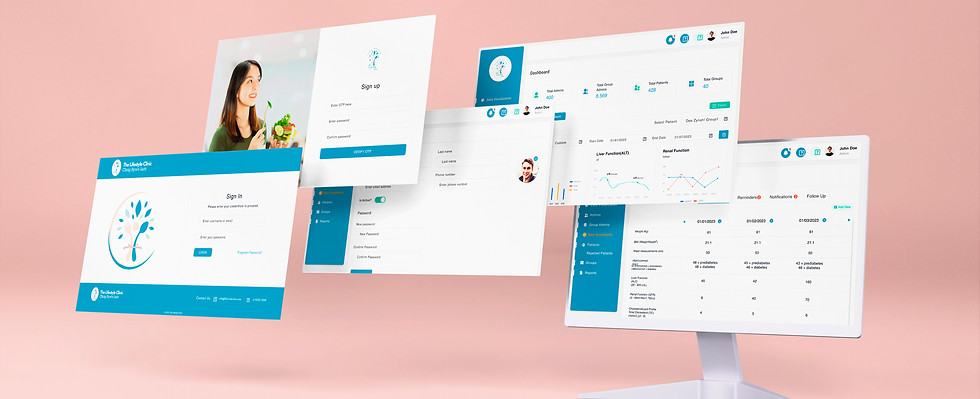
Diabetes Management Lifestyle App
Overview
There was a lack of timely and updated information about the patients as the patient app was not connected to a dashboard for the clinicians to review and that led to them not being able to provide adequate advice to the patients. Advices and lifestyle routine changes were not enforced to the patient and that lacked to awareness issue for the patient. Important information were not disseminated to the patient if their medical results showed high readings that were detrimental to the patient.
A webapp was introduced to address this gap, targeting to eliminate the communication gap and help improve the patient, while changing their lifestyles through periodically and adhoc information sending out through the app.
Goals
-
Empowers clinicians to help patient improve their outcome by reviewing their progress in realtime
-
Supports ongoing chronic disease management with personalized guidance and progress tracking
-
Acts as a virtual extension of the lifestyle clinic, delivering continuous care beyond in-person visits
Role & Task
Lead Designer
Workshop Facilitator
Duration
7 months
Tools
Figma
Jira
Claude
Platform
Desktop / Mobile
Problem statement
Clinicians lacked timely, up-to-date patient information and effective communication channels, resulting in delayed guidance, poor adherence to lifestyle changes, and missed alerts for critical health readings - ultimately compromising patient outcomes.

Stock image illustrating how roundtable was conducted
Research
-
4 weeks discovery phase focused exclusively on clinician workflows and pain points
-
Virtual Roundtable workshops with endocrinologists and general practitioners
-
Survey with patients on current app
-
Comparative SWOT analysis among other diabetes app
Repeated submission of the same forms is required because previous records are frequently inaccessible or appear to be missing within the system. This creates a significant administrative burden, as there is no reliable way to review or track patient information within a single integrated platform.
- Endocrinologist Clinician in UK
Information Architecture
Information architecture decisions:
-
A risk-based dashboard as the default entry point
-
Patients grouped by priority (e.g., high risk, moderate, stable)
-
Progressive drill-down from summary → patient detail → action
Clinician Journey Flow
1 - Onboarding & Setup
The clinician logs into the platform, enrolls patients, and defines care parameters such as glucose thresholds, monitoring frequency, and treatment goals.
4 - Patient Data Deep Dive
The clinician reviews individual patient profiles, analyzing glucose trends, adherence patterns, and lifestyle data through visual summaries.
UI Design & Design System
The interface was designed for clarity, speed, and cognitive efficiency in a clinical environment.
Clinicians:
A unified design system was established to power a clinician-first diabetes management platform - enabling real-time patient monitoring, surfacing actionable insights, and supporting timely, proactive interventions through consistent, scalable components.
Diabetes mangement lifestyle dashboard

2 - Daily Dashboard Review
At the start of the day, the clinician accesses a centralized dashboard displaying all patients, automatically prioritized by risk level and recent activity.
5 - Intervention & Advice
Based on insights, the clinician takes action like adjusting care plans, sending recommendations, or scheduling follow-ups directly through the platform.

3 - Risk Identification & Triage
The system flags patients with abnormal readings or negative trends. The clinician quickly scans alerts and selects high-priority cases for review.
6 - Outcome Review
Over time, the clinician evaluates patient progress through longitudinal data, refining treatment strategies and improving care delivery.
List of must and nice to have features have been identified through multiple rounds of interviews, and conducting comparative analysis with similar health management system applications.
List of "Must Have" features

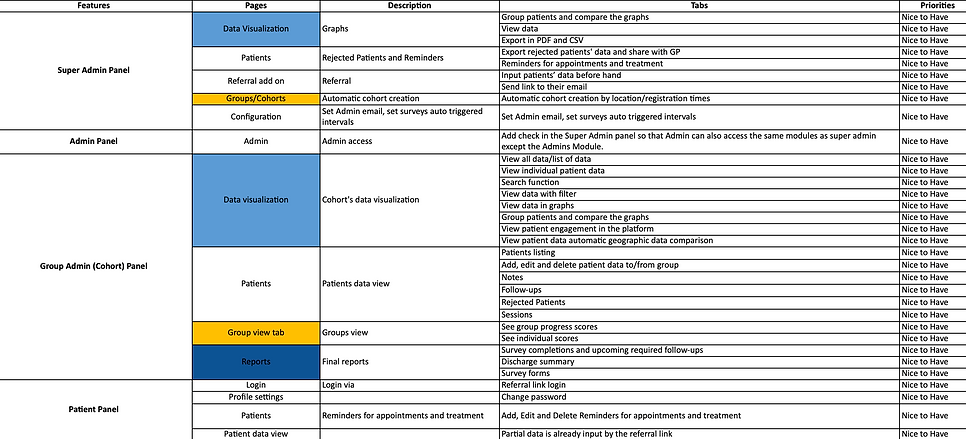
List of "Nice to have" features
Integrating a real-time patient overview dashboard, risk-based alerts, detailed trend analysis, and built-in communication and adherence tracking tools enables clinicians to quickly identify at-risk patients and intervene proactively.
Clinician's core features
Features to connect the dots between clinicians and patients
-
Patient overview dashboard
-
Risk stratification and alert system
-
Individual patient profiles with trend analysis
-
Communication and intervention tools
-
Adherence and appointment tracking
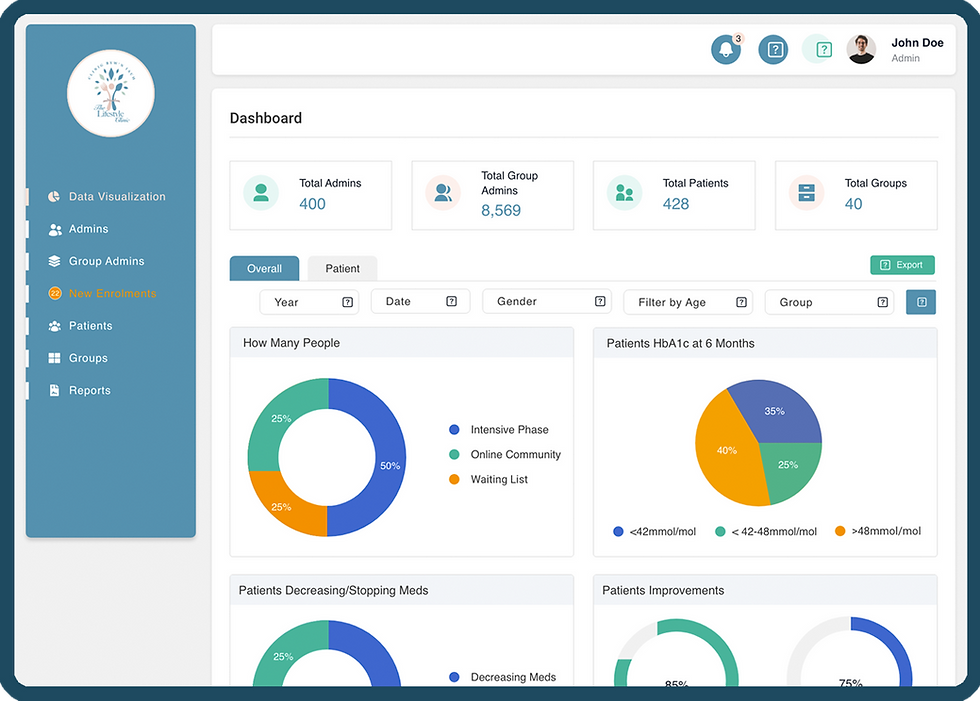
Diabetes stats for clinicians
i. Onboarding and Setup
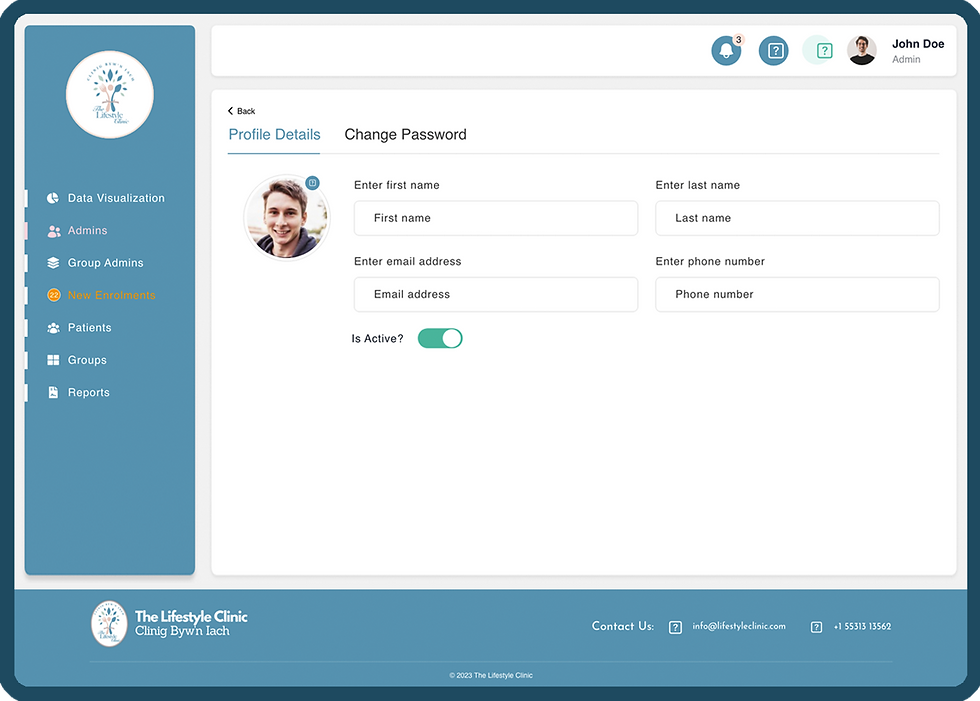
Profile Management
User will be to edit profile details upon sign up.
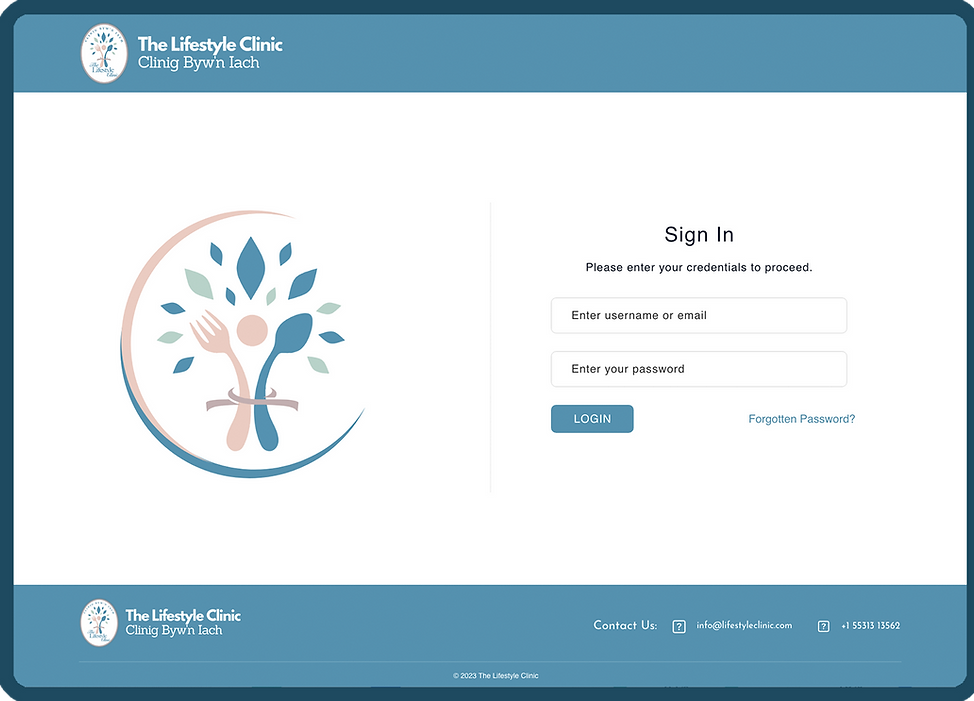
Sign in
Landing page to facilitate sign in.
Sign up verification email
User will be required to verify sign up with their email to proceed.

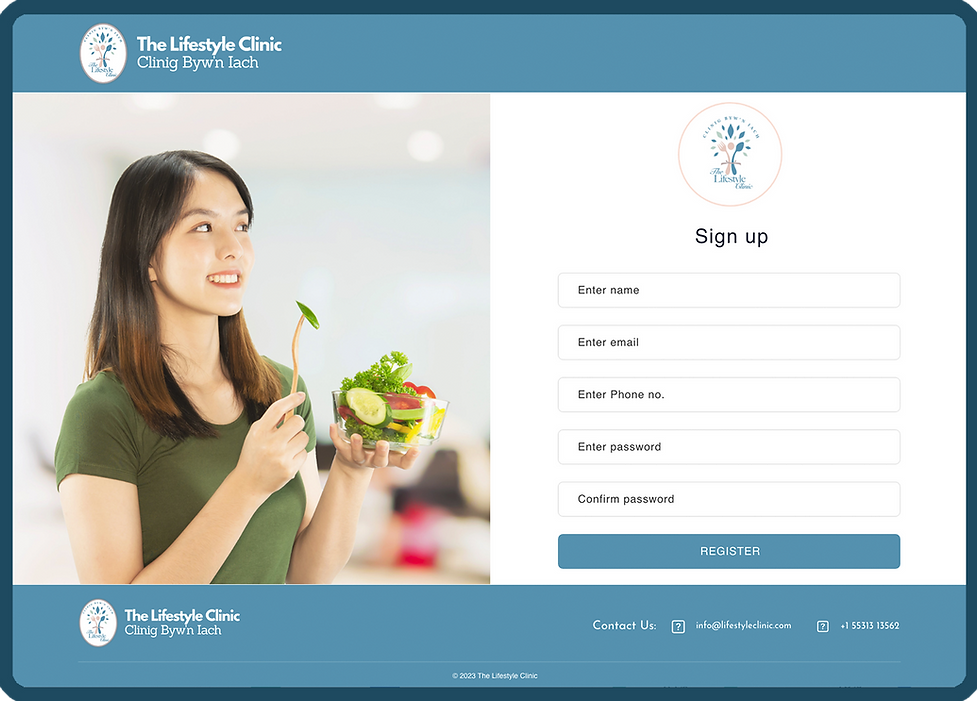
Sign up page
If user does not have a login credentials, initial sign up page will be available to user.

Additional OTP sign up checks
OTP verification with a phone will be required to complete the sign up, together with the email verification.
ii. Daily Dashboard Review and Patient group datas
Dashboard Overview
Administrators and clinicians will be able to see dashboard reviewing total population on the application.


Patient overview
Clinicians are able to toggle between overview and individual patient view. Patients can be selected in this view to review other patient information.

Additional Key Statistics
Administrators and clinicians are able to review demographics and disease treatment pathway based on patient diary inputs.

Patient Diabetes Statistics
Clinicians are able to review the journey and details of the patient based on their diary inputs and test results.
iii. Patient Deep Dive

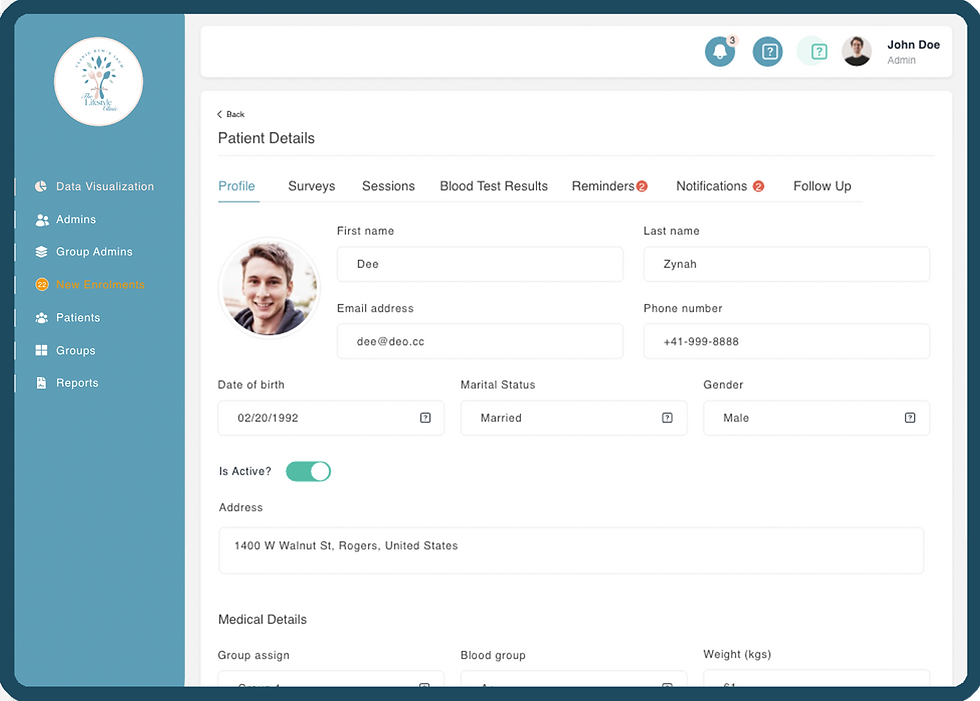
Patient's profile can be edited easily by administrators and clinicians if there are any updates to their personal information.
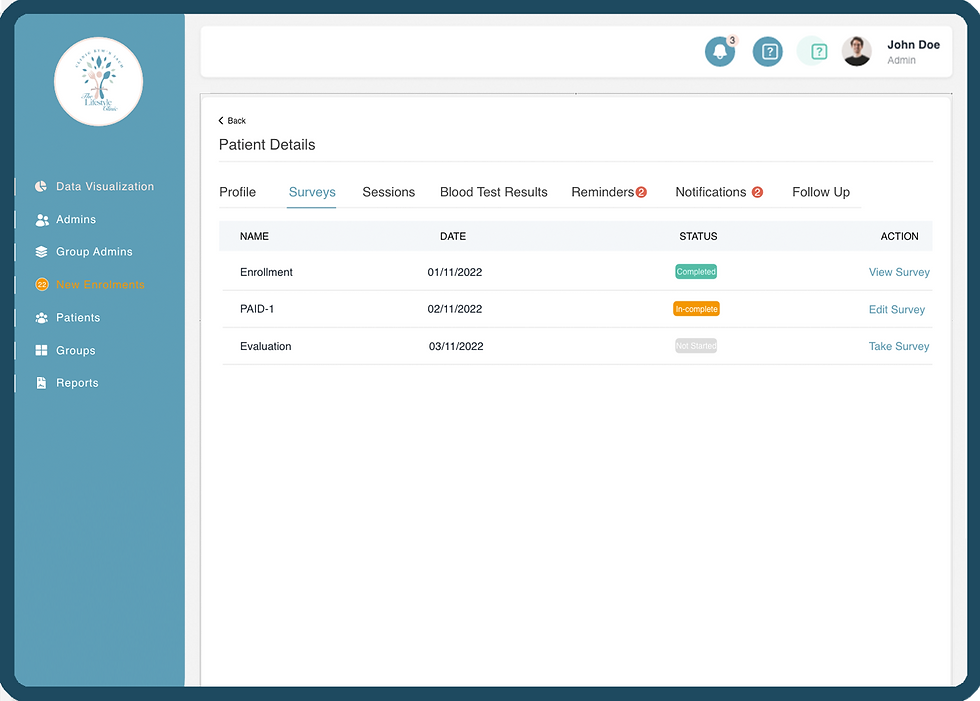
Showing status of surveys completed or ongoing completion by the patient.
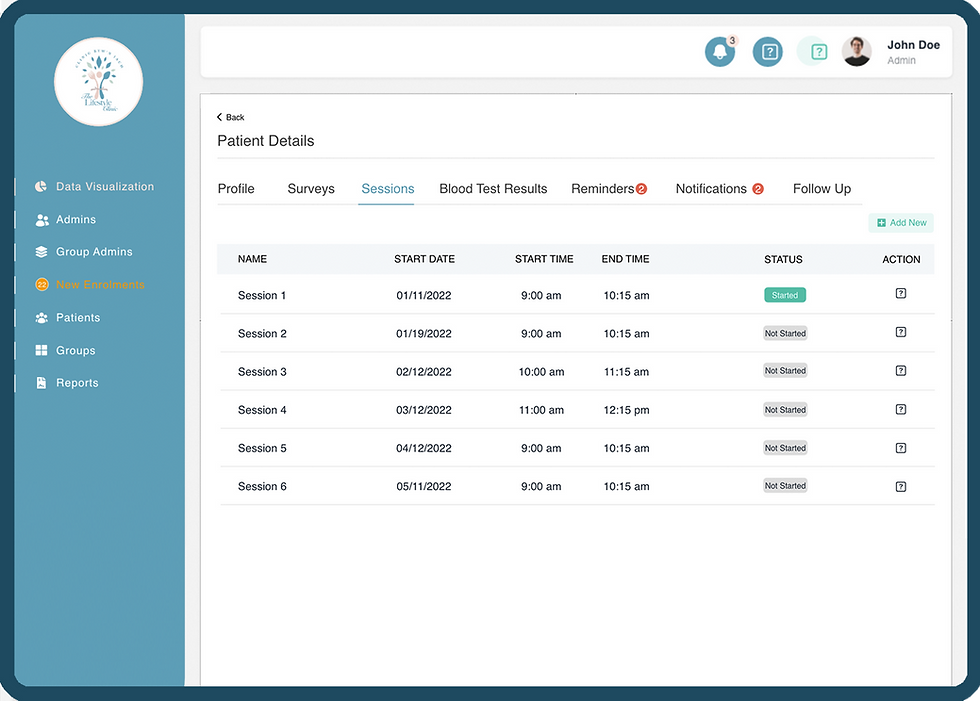
Showing a full record of the sessions required by the patient to attend.
Monthly test results for clinicians to review with the feature to include any ad-hoc results done outside of Lifestyle clinic.
Important reminders and advice can be provided to patients by system administrators and clinicians.
Patient contact information and details
Sessions schedule
Individual blood test results

Patient Reminders
Survey history

Usability focus test conducted among 25 healthcare professionals including clinicians and system administrators
Testing of Diabetes Management Lifestyle app
+27%
Decision Efficiency Rate
From 35% to 68% result increased in an action. This platform nudges clinicians towards the next steps / CTA (i.e Review patients data, schedule follow up appointments, Query of survey)
Clinicians are assigned to complete the following task
-
Login and review patient list
-
Review dashboard of patient health statistics
-
Send in communication notes to patients with ease
-
Switch and toggle between different patients easily
-
Identify incomplete patient entry and edit
+ >90%
Patient Coverage Efficiency
During a 30-minute review block and comparing past datas, a clinician was able to review 15 patients as compared to 8 patients previously.
100%
Data Clarity Score
Before, clinicians misinterpreted month on month data charts as the patient was not able to record digitally, resulting in loss of datas.
The platform allowed the clinicians to review month of month datas and resulted in 0 misinterpretation
Product Handover
The app was handover successfully to the client but the team is still actively supporting in the E2E maintenance phase. Continuous UX metrics have been tracked and new features have been included into the dashboard to reduce cognitive load for the datas.
More case studies


